

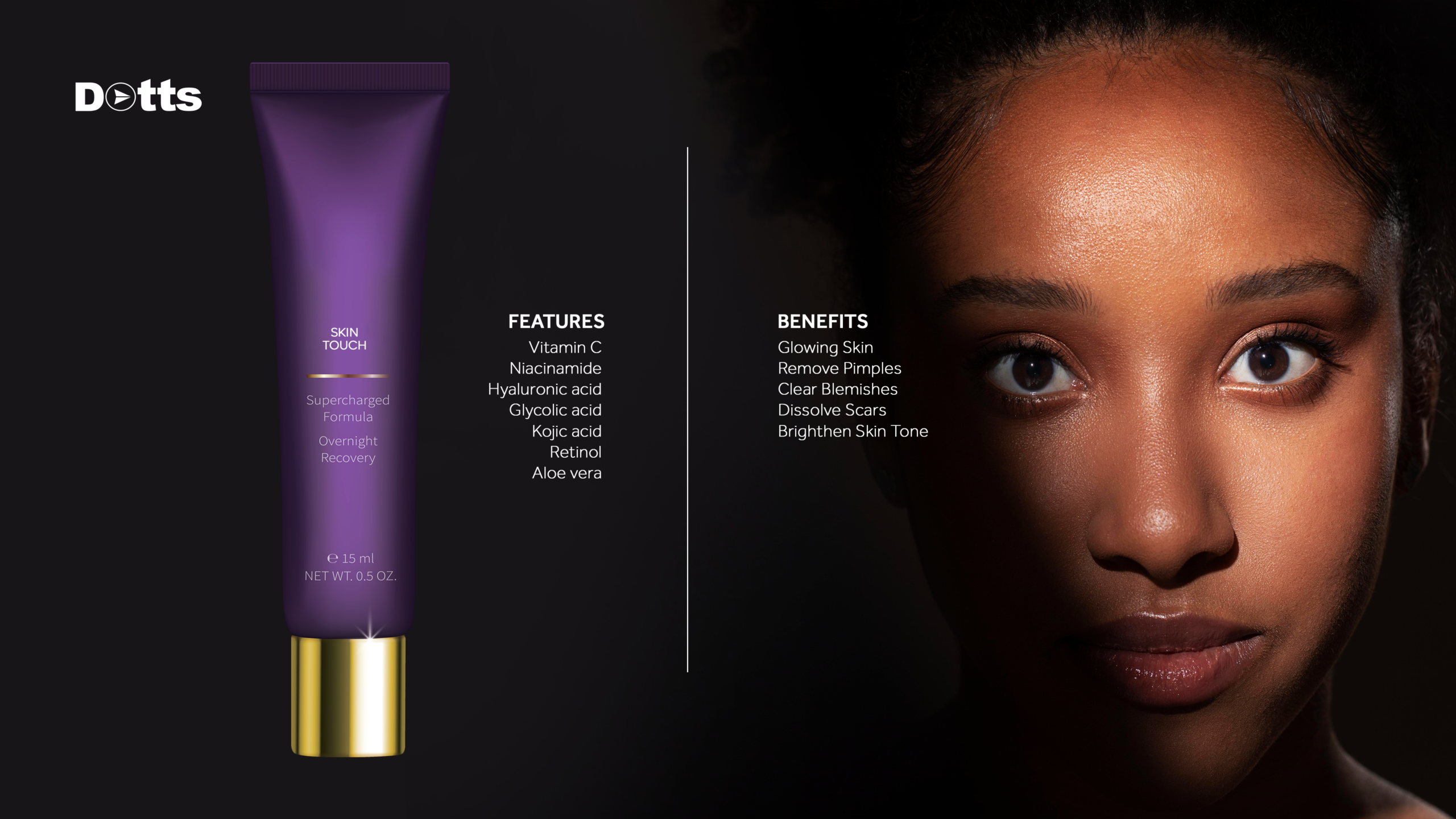
One mistake brands commonly make is focusing too heavily on product features while ignoring the benefits customers actually care about. Although features and benefits are closely connected, they serve very different purposes in persuasive communication.
Understanding the difference between features vs. benefits can significantly improve your marketing campaigns, website copy, product descriptions, and overall conversion rates. Customers rarely buy a product simply because of its specifications. Instead, they buy because of the outcome those specifications create.
In this guide, you’ll learn the key differences between features and benefits, why benefits matter more in marketing, and how to transform ordinary product features into compelling customer-focused messaging.
What Are Product Features?
Features are the specific attributes, characteristics, or functionalities of a product or service. They describe what the product has, what it does, or how it works.
In simple terms, features are factual statements about a product.
Examples of Product Features
- A laptop with a 512GB SSD and 16GB RAM
- A skincare cream with SPF 50 and hyaluronic acid
- A project management tool with Gantt chart views, Task automation and API integrations
- A pair of running shoes with carbon fibre plating and a 10mm heel drop
These are all product features because they describe technical specifications or built-in capabilities. Furthermore, features are important because they help customers understand what a product includes. However, features alone rarely convince people to make a purchase. Most consumers are not emotionally attached to technical details; they care about how those details improve their lives. That is where benefits become important.
What Are Product Benefits?
Benefits explain how a product or service helps the customer. They focus on the value, outcome, or positive experience users gain from a feature. In other words, benefits answer the question buyers are silently asking: “What’s in it for me?”
While features describe the product, benefits describe the customer’s advantage. They speak to desires, pain points, and emotions. Benefits make people feel something, and that feeling usually triggers action.
Using the previous examples:
- “Enjoy using your laptop without ever running out of storage.”
- “Wake up to visibly smoother, more hydrated skin.”
- “See your entire project timeline at a glance, no more missed deadlines.”
- “Run faster and further without the fatigue that holds you back.”
Now, notice how each benefit above traces back to a feature, but leads with the customer’s experience rather than the product’s specification. That shift in perspective is the entire game. In addition, customers are usually less interested in product specifications and more interested in convenience, comfort, efficiency, savings, security, or status.
Product Features vs. Benefits: The Core Differences Explained
The main difference between features and benefits is that features describe the product, while benefits describe the value customers receive.
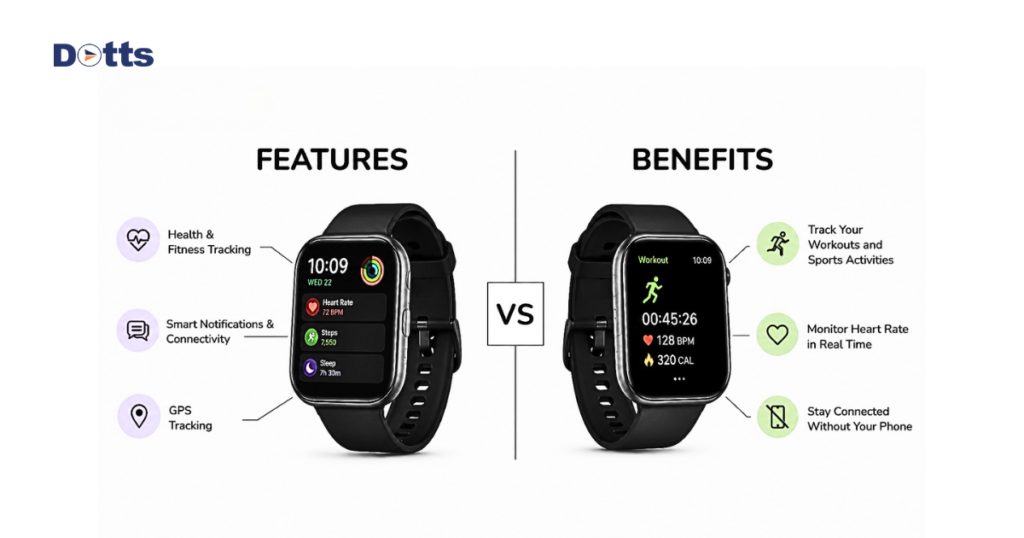
Here’s a simple comparison:
|
Features |
Benefits |
|
Product-focused |
Customer-focused |
|
Explain specifications |
Explain outcomes |
|
Logical and factual |
Emotional and persuasive |
| Describe what something is |
Describe why it matters |
Many businesses mistakenly overload their marketing with technical details because they assume customers care deeply about specifications. In reality, customers usually care more about how a product solves their problem or improves their lifestyle.
A customer buying a fitness tracker may not care about sensor technology. They care about staying healthy, tracking progress, and achieving fitness goals.
When you lead with features, you are asking your reader to do the interpretive work. When you lead with benefits, you do that work for them, and you do it in a way that connects to what they actually want. That’s the power of benefit-driven messaging.
Why Product Benefits Matter More in Marketing (And When Features Win)
In modern marketing, benefits drive most purchase decisions because buying is an emotional act that gets justified with logic afterwards. People choose the gym membership that makes them feel like their best self, and then justify it with the proximity to their office or home.
When to Lead With Benefits
Lead with benefits when you’re targeting:
- New or unaware audiences who don’t yet understand what your product does
- Emotional purchases, including fitness, wellness, fashion, travel, and personal finance
- Top-of-funnel content like ads, landing page headlines, and social posts
Benefits break through the noise because they speak directly to what the reader wants, before they even know they want your product.
When Features Take the Lead
Features become critical when buyers are already sold on the idea of a product and are now comparing options. In B2B, procurement teams and technical decision-makers often need feature lists to justify a purchase internally or evaluate fit against their infrastructure.
In these contexts, enterprise software, medical devices, and industrial equipment, skipping features can actually undermine trust. Specificity signals credibility.
How to Turn Features Into Benefits
One of the most effective copywriting skills is learning how to convert product features into meaningful customer benefits. A simple method is to ask: “So what?”
For every feature you mention, ask yourself how it helps the customer. Example:
Feature:
24/7 customer support
So what?
Customers can get help anytime they face issues.
Benefit:
Peace of mind knowing support is always available when needed.
State your feature, then keep asking “So what?” until you land on something your customer will genuinely care about.
Product Features vs. Benefits: Real-World Examples
SaaS / Tech Product Example
|
Feature |
Benefit |
| 99.9% uptime SLA | Your business never goes dark, even during peak hours |
| Real-time analytics dashboard | Make decisions based on what’s happening now, not last week |
E-commerce Industry Example
|
Feature |
Benefit |
| Waterproof up to 50 metres | Wear it in the rain, the pool, or the ocean with zero hesitation |
| Organic, cold-pressed ingredients | What goes on your skin is as clean as what goes in your body |
| Free next-day delivery | Customers receive products quickly without extra shipping costs. |
Healthcare Industry Example
|
Feature |
Benefit |
| Online appointment scheduling | Patients can book appointments conveniently without waiting on phone calls or long queues |
Common Mistakes Brands Make
Many businesses struggle with product messaging because they emphasise features too heavily, failing to connect them to customer value.
Here are common mistakes brands make:
- Listing Features Without Context
A long list of specifications can overwhelm readers if no clear customer benefit is attached.
- Ignoring Customer Pain Points
Marketing becomes ineffective when it talks about the product instead of addressing customer problems.
- Using Excessive Technical Language
Complex jargon can confuse audiences, especially non-technical buyers.
- Assuming Customers Understand the Value
Businesses sometimes assume customers automatically know why a feature matters. Clear explanations are essential.
Effective marketing bridges the gap between product capabilities and customer desires.
How to Use Both Product Features and Benefits Together
The smartest copywriters don’t choose between features and benefits; they use both in a strategically layered manner. FAB Framework
FAB is a structured method used in sales and copywriting that connects the dots for your audience:
- Feature — State what the product has or does
- Advantage — Explain why that feature is better than the alternative
- Benefit — Show what the customer gains as a result
Example using the FAB Framework:
“Our platform includes automated invoice reminders (Feature), so you don’t have to chase payments manually (Advantage), meaning you get paid faster and can focus on the work you actually love (Benefit).”
This structure works because it respects both types of audience: the logical ones who need proof, and the emotional ones who need to feel the outcome.
Frequently Asked Questions: Product Features vs Benefits
What is the difference between features and benefits?
Features describe the factual characteristics or functions of a product, while benefits explain how those features help customers or improve their experience.
Why are benefits more important than features?
Benefits matter more because customers are primarily interested in outcomes, solutions, and emotional value rather than technical specifications.
Can a feature also be a benefit?
Not directly, but a feature can be rephrased as a benefit. The key is asking “So what does this mean for the customer?” until you reach an outcome they genuinely care about.
Should I use features or benefits in my marketing copy?
Lead with benefits to connect emotionally, then support your claims with features as proof. The most effective copy uses both.
What is the FAB framework?
FAB stands for Feature → Advantage → Benefit. It’s a copywriting and sales technique that bridges the gap between what a product does and why that matters to the customer.
Final Thought on Product Features vs Benefits
Understanding the difference between features vs. benefits is essential for effective marketing, copywriting, and sales communication. While features explain what a product does, benefits explain why customers should care.
Although features provide useful information, benefits are what truly influence buying decisions because they focus on outcomes, emotions, and problem-solving.
Therefore, businesses that master benefit-driven messaging create stronger customer connections, improve engagement, and increase conversions.
Let DottsMediaHouse help you communicate your messaging and offering using our proven strategies to appeal to your target audience and drive meaningful results. Connect with us today!