

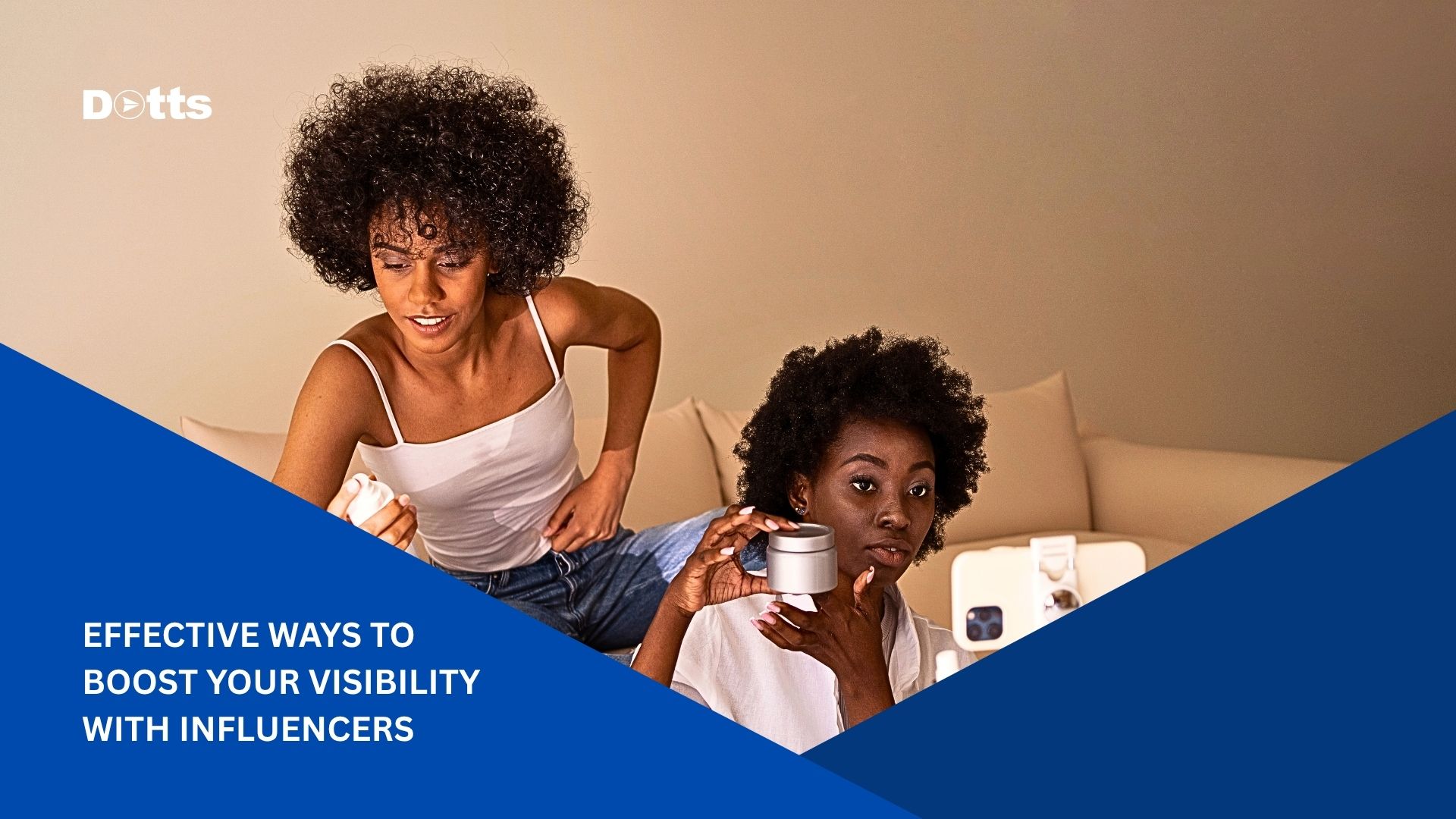
Are you planning to boost your visibility with influencers? The right creator can put your brand in front of a highly relevant audience, build credibility and turn attention into meaningful engagement.
But influencer marketing is no longer about choosing someone simply because they have a large following. The strongest campaigns connect the right influencer, audience, platform, content and campaign objective.
For African brands competing for attention across increasingly crowded digital spaces, you need to get your influencer marketing campaign right.
Therefore, here are practical ways to make influencer marketing work harder for your brand.
1. Start With a Clear Influencer Marketing Strategy
To boost your visibility with influencers, begin with what you want the campaign to achieve. Is the objective brand awareness, product discovery, engagement, website traffic, leads or sales?
Your objective should determine the type of influencer you work with, the platform you prioritise, the content format and the metrics you track.
A campaign without a clear objective can generate plenty of views without necessarily creating business value. Define your audience and desired outcome first, then build your influencer strategy around them.
2. Choose Relevance Over Follower Count
One of the smartest ways to boost your visibility with influencers is to prioritise audience relevance over vanity metrics.
A creator with 20,000 highly engaged followers who genuinely care about fitness may be more valuable to a sports brand than a celebrity with two million followers who have little connection to the category.
Instead of looking beyond follower count, kindly evaluate:
- Audience demographics and location
- Engagement quality
- Content relevance
- Creator credibility
- Previous brand collaborations
- Audience sentiment
- Content quality
Our guide on nano influencers vs. micro influencers explores why smaller creators can be powerful for brands targeting specific communities.
3. Create Content That Feels Native
Give creators enough direction to protect your brand message without taking away their authentic voice.
Influencer content performs best when it feels natural to the platform and the creator’s established style. A TikTok creator should not necessarily communicate like a television commercial, just as an Instagram lifestyle creator should not sound like a corporate press release.
Provide a strong brief covering the campaign objective, key messages, deliverables and boundaries, while giving the influencer room to interpret the story creatively.
4. Use Multiple Influencers Strategically
Rather than relying entirely on one personality, consider building a portfolio of creators across different audience segments.
A campaign could combine a macro-influencer for reach, micro-influencers for niche credibility and nano-influencers for community-level engagement. This creates multiple entry points into the conversation and can make the campaign feel broader and more authentic.
It also reduces your dependence on one creator’s performance.
5. Choose Platforms Based on Your Audience
If you want to effectively boost your visibility with influencers, go where your audience actually spends time, not only where influencer marketing happens to be trending.
Instagram may work well for visually led lifestyle campaigns; however, TikTok can support short-form entertainment and discovery, while YouTube may be better suited to detailed demonstrations or reviews. On the other hand, LinkedIn can be more relevant for B2B thought leadership.
Your platform choice should therefore follow audience behaviour and campaign objectives. Our article on influencer marketing trends provides additional context on how creator marketing continues to evolve.
6. Build Long-Term Creator Relationships
One-off influencer posts can create awareness, but long-term partnerships can build stronger brand associations.
When a creator genuinely understands your product and becomes familiar with your brand, their content can become more natural and credible. Repeated exposure can also help audiences remember your brand rather than seeing it as another isolated sponsored post.
Think beyond a single post. Consider ambassador programmes, product launches, events, recurring content series and creator-led campaigns.
7. Measure More Than Reach
To boost your visibility with influencers, you need to know whether visibility is translating into meaningful outcomes.
Depending on your objective, track metrics such as:
- Reach and impressions
- Engagement rate
- Video views and completion rate
- Website traffic
- Leads or conversions
- Promo-code usage
- Audience growth
- Brand mentions and sentiment
Measurement allows you to identify which creators and content formats are actually contributing to your objectives.
Why Partner With DottsMediaHouse?
The difference between finding an influencer and finding the right influencer can significantly affect campaign performance.
At DottsMediaHouse, we handle influencer marketing end-to-end, from strategy and influencer discovery to creator selection, campaign management, content coordination, execution and performance reporting.
So, instead of spending hours searching through follower counts and social profiles, brands can leverage our access to a large network of influencers and expertise to identify the perfect fit.
This is particularly valuable for brands targeting different African and global markets, where audience preferences and creator influence can vary significantly.
Frequently Asked Questions
How can influencers increase brand visibility?
Influencers increase visibility by introducing brands to relevant communities through trusted, engaging and platform-native content. The effectiveness depends on creator-audience fit, content quality and campaign strategy.
Are micro-influencers effective for brands?
Yes. Micro-influencers can provide access to highly specific communities and often make sense when relevance and engagement are more important than mass reach.
Should brands work with multiple influencers?
Often, yes. A carefully selected mix of creators can expand reach across different audience segments while reducing dependence on one influencer.