
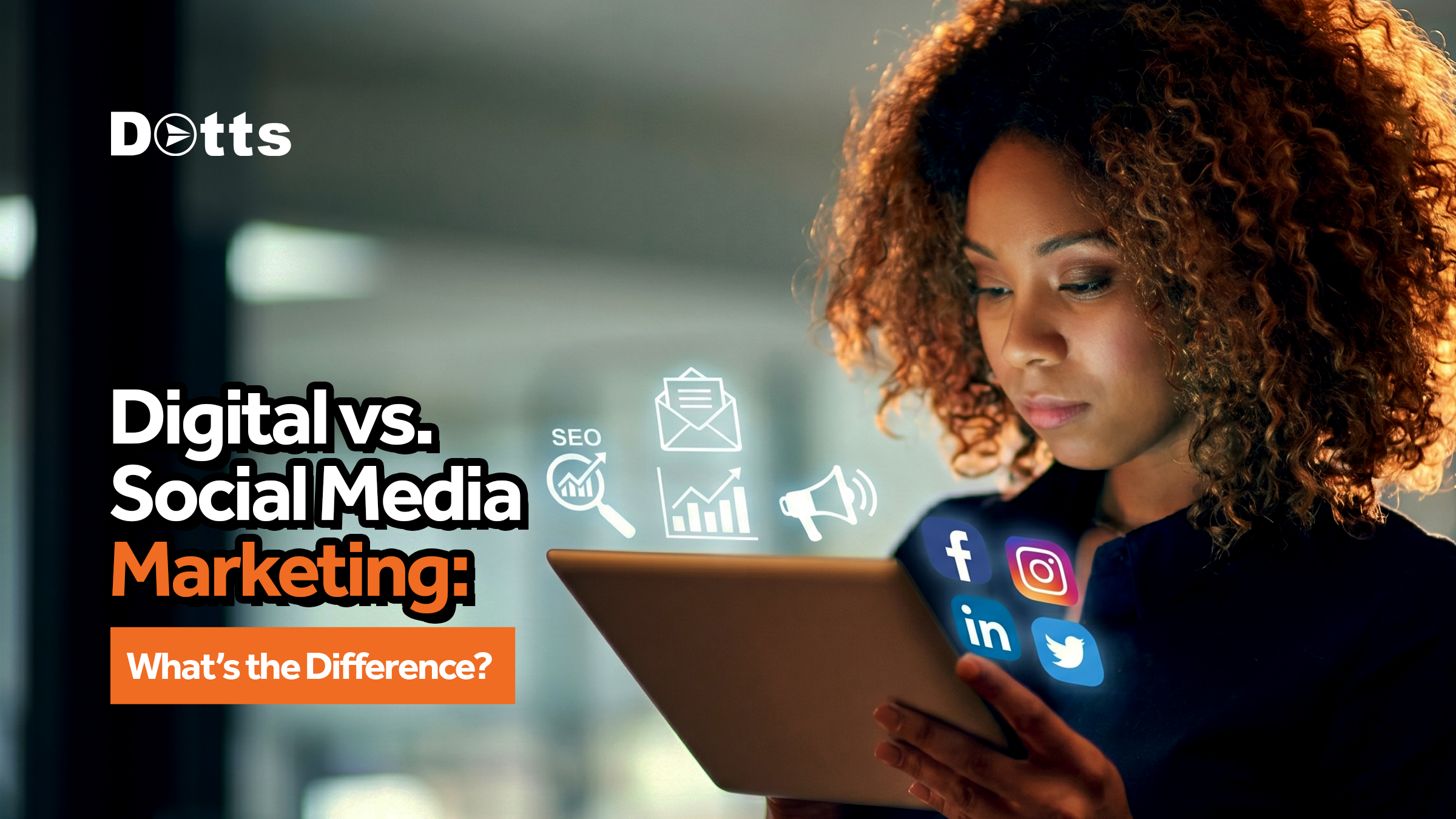
For many African brands, the terms digital marketing and social media marketing are often used interchangeably. While they are closely connected, they are both approached in different ways. Understanding the difference between digital vs. social media marketing can help brands make smarter marketing decisions, improve customer engagement, and increase revenue.
In these modern times, brands need a strategy that combines visibility, trust, and customer interaction. That is where digital marketing and social media marketing play important roles.
Let’s clear the air!
What Is Digital Marketing?
Digital marketing is the broad use of online channels to promote products or services. It includes every marketing activity that happens on the internet.
Some common digital marketing channels include:
- Search Engine Optimisation (SEO): getting found on Google when people search for what you offer
- Pay-Per-Click advertising (PPC): Google Ads, display ads, and programmatic campaigns
- Email marketing: newsletters, drip campaigns, and promotional emails
- Content marketing: blogs, videos, podcasts, and guides that attract and educate
- Social media marketing: organic posts and paid ads on social platforms
- Mobile marketing: a multi-channel digital strategy aimed at reaching target audiences through smartphones, tablets, and smartwatches.
- Affiliate marketing: a performance-based revenue-sharing model where you earn a commission by promoting another company’s product or service.
In simple terms, social media marketing is just one part of digital marketing.
For example, a Nigerian e-commerce brand may use:
- SEO to rank on Google
- Email campaigns to nurture leads
- Meta ads to attract customers
- Blog content to educate buyers
All these activities work in collaboration to form a digital marketing strategy.
According to Datareportal’s Digital 2024 report, Africa now has over 570 million internet users, and that’s a massively growing digital audience waiting to be reached across all of these channels, not only social media feeds.
What Is Social Media Marketing?
Social media marketing focuses specifically on social platforms, building a presence, growing a community, and driving action through social content and ads.
The key platforms driving results in Africa right now are:
- Facebook and Instagram: dominant for consumer brands and e-commerce
- WhatsApp Business: the most powerful direct-to-customer channel on the continent
- TikTok: fastest-growing platform for youth audiences across West and East Africa
- LinkedIn: essential for B2B brands in Nigeria, Kenya, South Africa, Ghana, and other African countries.
- X (Twitter): serves as a critical digital catalyst across Africa, and its unique capability for real-time, unfiltered information dissemination empowers a young, tech-savvy population and organisations.
- YouTube: serves as a vital educational, marketing, and business tool for entrepreneurs across Africa.
Data from Statista revealed that over 384 million Africans are active on social media, but they are not all on the same platforms. Which means, understanding where your audience hangs out online is important.
Therefore, the main goal of social media marketing is to build engagement, visibility, and relationships with audiences. Unlike broader digital marketing, social media marketing relies heavily on conversations and community building.
For example, a fashion brand in Ghana may use Instagram Reels and TikTok videos to:
- Showcase new collections
- Collaborate with influencers
- Respond to customer questions
- Build brand awareness
Social media marketing works especially well for brands targeting younger, mobile-first consumers across Africa.
Digital vs. Social Media Marketing: The Key Differences
| Factor | Digital Marketing | Social Media Marketing |
| Scope | Covers all online marketing channels. | Focuses only on social platforms. |
| Traffic Sources | SEO, PPC, email, content, social media | Instagram, Facebook, LinkedIn, TikTok |
| Primary Goals | Full-funnel – lead generation, website traffic, conversions, sales | Audience engagement, brand awareness, community growth, customer interaction |
| Content Style | Blog posts, Landing pages, Email newsletters, SEO articles, PPC ads | Reels, Stories, Tweets, Short videos, Carousel posts, Live sessions |
| Measurement and Analytics | Multi-channel ROI – leads, revenue, website traffic, conversion rates, cost per lead, search rankings | Likes, shares, engagement rates, follower growth, reach, and impressions |
| Longevity | SEO and email compound over time | Content lifespan is typically 24–48 hours |
Social media is brilliant for building trust and visibility. But if someone sees your brand on Instagram and then searches Google for your service, you need SEO to show up. One without the other creates gaps in your customer journey.
Why African Brands Need Both Online Marketing Strategies
Many businesses make the mistake of choosing one over the other. The reality is that the best marketing strategies combine both digital and social media marketing. However, determining whether to prioritise a holistic digital marketing plan or social media marketing depends on your business model, current level, and goals.
Digital Marketing Builds Long-Term Visibility
SEO and content marketing help businesses appear in Google searches long after content is published.
For example, a Kenyan fintech company ranking on Google for “best payment apps in Africa” can generate leads consistently without relying only on ads.
Social Media Marketing Builds Relationships
Social platforms help brands interact directly with customers in real time. African consumers value authenticity and trust. Brands that respond quickly and create engaging content often build stronger loyalty. This is especially true on platforms like TikTok, Instagram, and WhatsApp Business.
Nevertheless, for most African brands, the best approach is to create and execute an integrated strategy.
How to Integrate Both Digital and Social Media Marketing Strategies Effectively
The most successful African brands don’t choose between digital and social media marketing. They integrate them into one seamless system.
- Optimise Your Website for SEO
Use keywords your audience searches for and create valuable blog content.
- Repurpose Content for Social Media
Turn your blog posts into shorter social media content, such as:
- Instagram carousels/Reels
- LinkedIn posts
- TikTok videos
- X threads
- Use Data to Guide Your Decisions
Track what content drives engagement, leads, website clicks, and sales.
Conclusion
Understanding Digital vs. Social Media Marketing is essential for businesses looking to grow in Africa’s fast-changing digital economy.
As we have mentioned earlier, digital marketing gives brands a complete online growth strategy, while social media marketing helps create engagement and community. The most successful brands do not choose one over the other. Instead, they combine SEO, content marketing, paid ads, and social media to reach customers at every stage of the buyer journey.
Not sure where to start? Reach out to DottsMediaHouse for a consultation session to understand the current level of the brand and provide integrated online marketing solutions to scale your brand.
Digital vs. Social Media Marketing