Physical Address
304 North Cardinal St.
Dorchester Center, MA 02124
Physical Address
304 North Cardinal St.
Dorchester Center, MA 02124

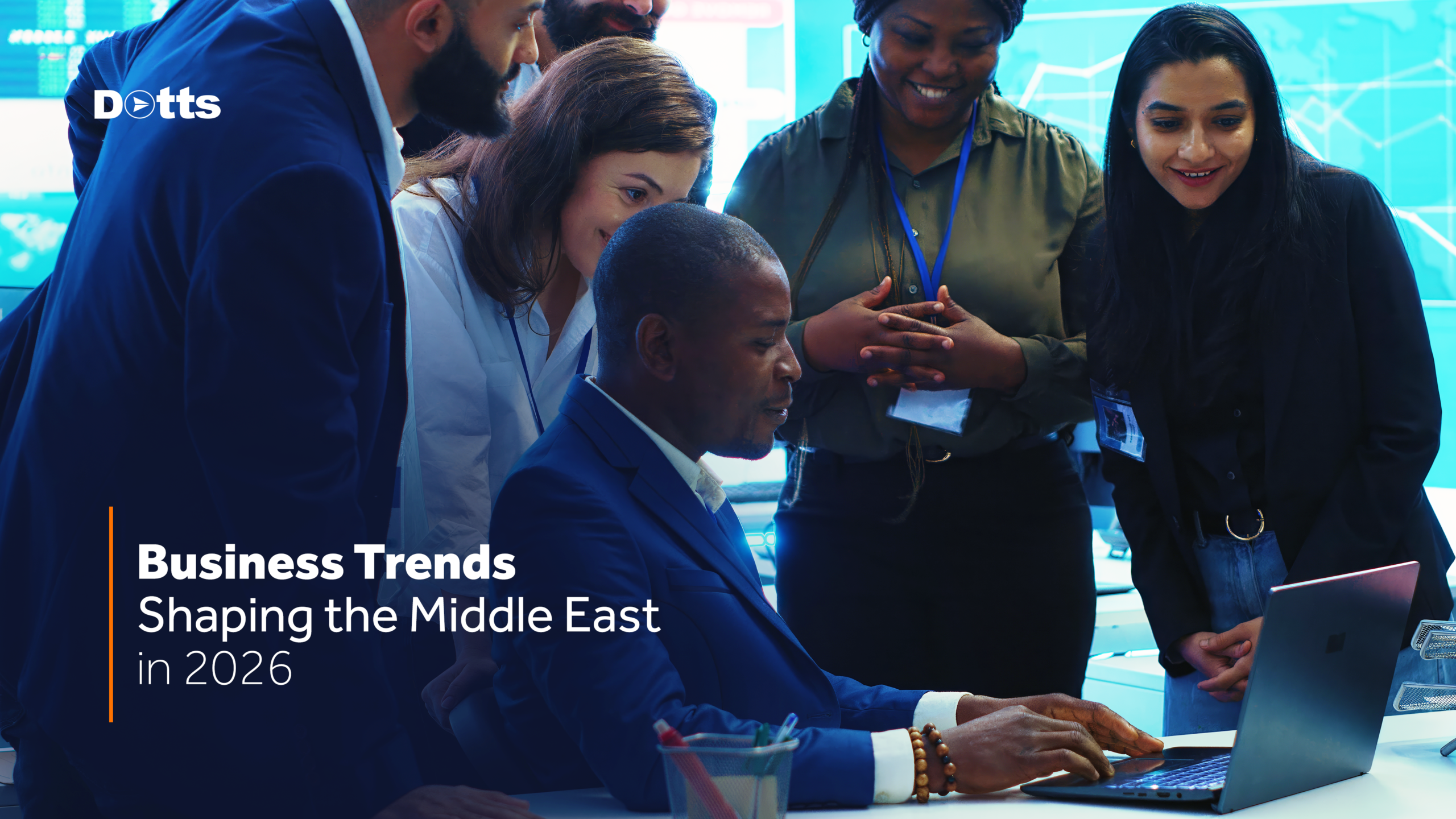
If you are a brand doing business in the Middle East right now, you already know how fast trends move in the region. What worked last year might not cut it today. New platforms are rising, consumer habits are shifting, and the region’s economies are diversifying at a pace that a few predicted five years ago.
While these business trends are continuously evolving, are you positioned to take advantage of them?
This report analyses the top business trends in the Middle East for 2026, across digital and traditional channels. Therefore, giving you a clear strategy to maximise your competitive edge.
According to the World Bank, GCC economies are projected to grow by 4.4% in 2026, rising to 4.6% in 2027, and this is a positive signal that will impact businesses. More disposable income, more consumer spending, more opportunity for brands that show up smartly.
Similarly, PwC’s 29th Global CEO Survey found that Middle East CEOs rank among the most confident business leaders globally. Saudi Arabia and the UAE have both broken into the top 10 global investment destinations, which means capital is flowing in, competition is heating up, and standing out matters more than ever.
What this means for brands and marketers: A confident economy creates consumers who want more. Brands that invest in bold, well-positioned marketing right now will claim market share before the crowd catches up.
Artificial intelligence is everywhere in the Middle East’s business story for 2026, and not just in tech circles. AI is reshaping marketing, customer service, advertising, and content creation at every level. Gulf sovereign wealth funds alone poured $66 billion into AI-related sectors as 2026 opened, signalling where the region’s priorities lie.
For marketers, this translates to AI tools being used to analyse consumer behaviour, personalise campaigns in real-time, automate ad buying through programmatic platforms, and generate content at scale.
According to Google’s 2026 digital marketing trends report, the shift toward Generative Engine Optimisation (GEO) is already underway, meaning brands need to create rich, authoritative content that AI-powered search tools can surface, not just traditional SEO.
Programmatic advertising, where AI automatically buys ad space and targets the right audience in real-time, is gaining huge traction across the UAE, Saudi Arabia, and Egypt. Brands still relying on manual ad placements are already behind. So, if your team has yet to integrate AI tools into your media buying or content strategy, review your internal strategy.
The Middle East has one of the highest social media usage rates in the world, and in 2026, those platforms are no longer only for brand awareness. They are full-blown sales channels. Features such as Instagram Shops, TikTok Shop, and Facebook Marketplace are becoming the preferred buying destinations for millions of consumers across the region.
Furthermore, Live-stream shopping events are growing rapidly, particularly among younger audiences in the UAE and Saudi Arabia. A single viral video can sell out a product in no time. Brands that build native, shoppable content and not only website redirects are winning customers at the moment of discovery.
The takeaway: If you are still treating social media as only a top-of-funnel awareness tool, you are leaving revenue on the table. Start building a social commerce strategy that reduces friction between product discovery and purchase.
We have been talking about video for years, but 2026 is the year that short-form video should become non-negotiable for brands in the Middle East. Instagram Reels, TikTok, and YouTube Shorts are eating up screen time, especially when supported with ad spend.
As we have always pointed out, the fact that your video is perfectly edited does not guarantee that it will perform well. What gets you more eyeballs is the authentic angle of your content and how you can capture the attention of your audience in the first few seconds. This works perfectly in line with the low attention span of social media users and the younger GCC consumers who value realness over perfection.
So, invest in compelling opening moments/hooks, always add subtitles, and make your content platform-native.
Middle Eastern consumers increasingly trust real people over brand accounts, and that’s driving the creator economy from a nice-to-have into a core marketing strategy. In 2026, the lines between creators and personal shoppers have become blurred, especially in fashion, food, travel, and beauty categories that dominate GCC spending.
Micro-influencers with highly engaged niche audiences are often delivering better ROI than mega-celebrities.
Meanwhile, platforms like Threads are growing rapidly, and Social Media Today reports the platform is on track to overtake X (formerly Twitter) in active users in 2026, giving brands new spaces to connect through authentic conversation rather than broadcast-style advertising.
Saudi Arabia’s Vision 2030 and the UAE’s Strategic Plan 2031 are not just government documents; they are reshaping entire industries and creating demand for brands, agencies, and service providers that didn’t exist in the region five years ago. Saudi non-oil exports grew 17.8% year-on-year in Q2 2025, confirming that diversification is now fully operational.
In addition, sectors like tourism, entertainment, technology, health, and real estate are growing fast. For marketers, this means new client categories, new audience segments, and new briefs. The brands and agencies that understand these emerging sectors and speak their language will be the ones winning the best mandates.
One of the quieter but structurally important shifts in 2026 is geopatriation, the move toward local, sovereign data infrastructure. Middle Eastern governments are increasingly requiring data to be stored and processed in-country, which is changing how digital platforms, cloud providers, and marketing technology companies operate in the region.
For brands, this has practical implications for everything from CRM platforms and analytics tools to email marketing and ad targeting. Building first-party data strategies, owning your audience relationship rather than renting it from platforms, is essential.
PwC’s Voice of the Consumer findings show that Middle Eastern consumers, particularly in Saudi Arabia, the UAE, Qatar, and Egypt, are becoming more value-driven in their purchasing decisions.
There is a growing appetite for wellness products, health-conscious choices, and brands that stand for something beyond profit. This doesn’t mean consumers aren’t price-sensitive. They are, especially in markets like Egypt, where the cost of living has risen, but they want brands that make them feel good about their choices. Authenticity, community building, and tangible impact are becoming competitive advantages.
The winning brands in the Middle East in 2026 will be those that prioritise speed, create genuine audience relationships, and strategically use digital and other relevant tools to make these connections smarter and more impactful.
Here’s what we recommend acting on right now:
The Middle East is one of the most exciting business environments in the world right now. The economy is growing, digital adoption is accelerating, and consumer expectations are rising.
We believe the brands that will lead in 2026 are the ones that study these trends and implement the relevant ones strategically.
At DottsMediaHouse, we monitor the market and stay connected to what’s happening, so you get the essential insights to help boost your brand and make informed decisions. Connect with us today!